
Neuro Surgery | 5 Dec 2025
Awake Brain Surgery: Meaning, Procedure, Benefits & Safety Explained
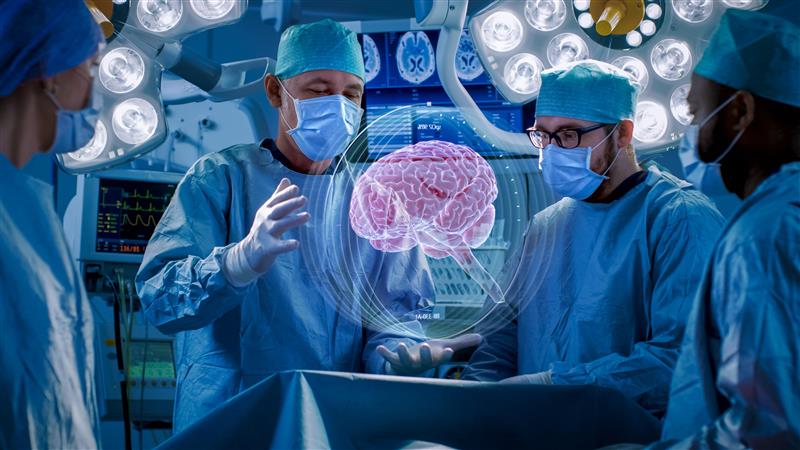
Brain surgery is the most sensitive and risky area in medicine, however, the progress in technology has made it safer, more accurate, and effective to a large extent. One of the most brilliant methods awake brain surgery is a brain operation done while the patient is awake for part of the procedure. It helps doctors protect important functions like speech and movement while safely removing a brain tumour or abnormal tissue. Contrary to the common brain operations that are done under general anaesthesia, in awake brain surgery the patient is still alive and reacting during the parts of the operation when brain functions have to be tested. This way surgeons can make sure they do not injure areas controlling speech, movement, and memory.
If you are wondering what awake brain surgery is, how it works, and why a doctor may recommend it, this guide answers your most common questions.
Although the idea of being awake during brain surgery can sound frightening, the procedure is carefully planned to keep the patient safe, comfortable, and closely monitored at every stage.
What Is Awake Brain Surgery?
Awake brain surgery, also known as awake craniotomy, is an advanced neurosurgical procedure where the patient remains awake during critical parts of the operation. This allows surgeons to safely remove brain tumours or treat abnormal brain areas while continuously checking speech, movement, and memory functions. By interacting with the patient in real time, doctors can protect healthy brain tissue and reduce the risk of long-term neurological damage.
Interestingly, the brain does not feel pain because it has no pain receptors. The patient is given local anaesthesia and state-of-the-art sedatives to make sure he/she is at ease throughout the operation.
Awake craniotomy is usually done when the tumour or lesion is located next to brain areas that govern severely important functions like:
- Speech
- Movement
- Vision
- Memory
- Behaviour
- Understanding and reasoning
If the patient is still conscious, the neurosurgeon thus can comfortably operate while being certain of not inflicting damage to these functions.
Why Awake Brain Surgery Is Done?
Many patients ask why awake brain surgery is done and why it would be necessary to stay awake during an operation. Here are the most important reasons:
1. To Protect Critical Brain Functions
In case a tumour or the epilepsy-causing focus is close to the regions of the brain that are in charge of movement or speech, surgeons can use awake operative techniques to test these functions on the spot, in the very time of the operation. This allows them to carry out the removal of a tumour in a safer way because they do not destroy the still healthy cells unnecessarily.
2. For Higher Accuracy
During an awake craniotomy neurophysiologists conduct functional mapping to locate the exact areas of the brain responsible for speech, movement, and sensation. As a result, the operation is performed with very high accuracy.
3. To Treat Tumours in High-Risk Areas
Some brain tumours— gliomas, for instance—are usually located close to the brain areas that perform vital functions. With the help of an awake operation, the removal of the maximum amount of tumour tissue is quite possible while at the same time the risk is kept at a minimum.
4. To Manage Severe Epilepsy
Besides that, awake brain surgery can be a solution for epilepsy. When the doctor stimulates a brain region, only the patient can say how he/she feels, thus enabling physicians to identify the exact location that generates the seizure.
5. To Reduce Complications
The possibility of symptoms following the operation such as weakness, speech problems, or memory impairments, is reduced due to the patient's ability to provide comments to the surgeon as the operation is going on.
How Awake Brain Surgery Works?
Knowing the details of an awake brain surgery can be reassuring and may help patients who are going to have such a operation calm down. Here is a step-by-step breakdown of the surgery:
Step 1: Pre-Surgery Evaluation
Before the operation, the patients are submitted to:
- MRI and CT scans
- Functional MRI (fMRI)
- Neuropsychological tests
- Speech and language assessments
All these tests offer a detailed picture of the brain functioning and help to plan the most secure route.
Step 2: Anaesthesia & Sedation
The patient gets a mild sedative so he is comfortable and relaxed. Local anaesthesia is used to numb the area of the scalp where the incision will be made.
When the most important stages of the operation are going on, the patient is kept fully awake and so he can be called upon to respond.
Step 3: Opening the Skull (Craniotomy)
A small portion of the skull is taken out gently to reach the brain. As the brain itself is insensitive to pain, the patient keeps comfortable.
Step 4: Brain Mapping
This is the most critical part of the awake brain surgery.
The surgeon, by using mild electrical stimulation, locates the areas of:
- Speech
- Hand and leg movement
- Vision
- Sensation
- Cognition
The patient might be instructed to:
- Speak
- Count
- Move their hand or leg
- Name pictures
- Read sentences
- Identify objects
The real-time responses enable the surgeons to prevent the damage of the most vital areas.
Step 5: Tumour or Lesion Removal
The doctor after finishing the mapping will take out the tumour or the part giving rise to the seizures — only from those areas which are known to be safe. The patient keeps on responding thus, vital functions are preserved.
Step 6: Completion & Closure
Once the operation is over, the patient is again given sedatives to keep him comfortable. The bone of the skull is fixed back, and the incision is closed.
“The role of the central nervous system in surgical precision”
“Importance of specialised neurological expertise”
Recovery After Awake Brain Surgery
The recuperation period is different depending on the condition that has been treated. Some of the most common experiences are:
- Mild headache
- Temporary tiredness or confusion
- Slight weakness or speech hesitation (usually gets better quickly)
- Hospital stay of 3–5 days
Most of the patients are able to come back to their daily activities even within a few weeks. They may also be put on a Rehab program which could include physiotherapy and speech therapy for promoting the recovery process.
Benefits of Awake Brain Surgery
Why an awake craniotomy would be a first choice in complicated cases is explained by several reasons:
1. Maximum Tumour Removal with Minimum Risk
With the help of the patient, who monitors the functions, the surgeon is able to remove a greater amount of the abnormal tissue safely.
2. Reduction in the Risk of Disabilities
The in-time testing done to speech, memory, movement, and other functions, keeps them safe—thus the risk of postoperative complications is significantly lowered.
3. Shorter Recovery
The majority of patients are able to recuperate within a shorter period of time and with less neurological deficits.
4. Better Long-Term Prognosis
The outcomes are usually better as the removal of the tumour is more thorough and precise.
Is Awake Brain Surgery Safe?
It is safe. Under the conduct of a proficient neurosurgeon and a well-trained neuro-anaesthesia team, the procedure of an awake brain surgery is deemed to be quite safe. Every detail of the operation is planned out carefully and it is also under constant monitoring that ensures comfort and safety for the patient.
Final Thoughts
Awake brain surgery is one of the most advanced and life-changing procedures in modern neurosurgery. Understanding what is awake brain surgery, how it works, and why awake brain surgery is done can help patients feel confident when considering treatment options.
At ANC, our expert neurosurgeons specialise in performing the awake brain surgery procedure with high precision to preserve speech, movement, and cognitive functions—all while ensuring maximum tumour removal and improved quality of life.
Medical Review & Author Information
This article has been medically reviewed by Dr. O. P. Arora, Senior Neurosurgeon with 40+ years of experience in brain tumour surgery and advanced neurosurgical procedures, including awake brain surgery. Dr. O. P. Arora specialises in preserving speech, movement, and cognitive functions while ensuring maximum tumour removal.
Recent Blogs
-

Difference Between Dementia and Alzheimer's: Things all Families need to know
Dementia is an umbrella term for cognitive decline; Alzheimer's is one specific cause of it (the most common one). This blog explains that distinction, covers other dementia types, lists early warning signs in elderly parents, and pushes for early diagnosis via Arora Neuro Center.
-
Why A Routine Heart Check Up Saves Lives
Most heart problems develop silently over years with no obvious symptoms. Heart screening tests detect cholesterol levels, blood pressure, and hidden blockages early — when lifestyle changes can still prevent a crisis.
-

What a Cardiac Profile Test Actually Tells Your Doctor About Your Heart
When something goes wrong with your heart, doctors can't rely on guesswork. A cardiac profile test checks your blood for specific markers like troponin, electrolytes, and cholesterol to find out exactly what happened inside your chest - and make sure you get the right treatment, not just the closest one.
-
ECG Test For Heart Attack: What a Normal Result Can and Can't - Tell You
Hearing that you might have a heart attack with a normal ECG sounds completely confusing when your chest feels terribly heavy. You likely rushed to the local clinic because you felt an unusual squeezing sensation after a quick morning walk.
-

Heart Blockage Test: A Complete Guide to Types, Signs & What to Expect
Getting a heart blockage test usually feels far scarier than the actual clinic visit itself. You might notice a strange tightness in your chest while chasing your dog around a local park. Many people simply blame this sudden heavy feeling on bad digestion after eating a spicy street snack.